What Is Stock Market? Ask five people what a “stock market” actually is, and you’ll get five different half-answers — something about buying shares, something about Sensex going up or down, something about rich people and screens full of numbers. None of them are wrong, exactly. They’re just describing the weather without explaining the climate.
Here’s the climate: a stock market is a system, not a place, and once you understand how that system actually works, every headline about it — “Sensex tumbles,” “Nifty hits record high” — stops feeling like noise and starts making sense.
The Simplest Possible Definition
A stock market is where ownership of companies gets bought and sold. When a company wants to raise money to grow, it can sell small pieces of itself — shares — to the public instead of only borrowing from a bank. Once those shares exist, people trade them among themselves, and that ongoing buying and selling is what people mean by “the stock market.”
That’s really it. Everything else — indices, exchanges, regulators, price charts — exists to make that buying and selling fair, fast, and trackable.
How Does a Stock Market Actually Work?
Primary Market vs. Secondary Market
A company sells shares to the public for the first time through an IPO — that’s the primary market, and the money raised goes directly to the company. After that, when you buy those shares from another investor rather than the company itself, you’re in the secondary market. Almost everything you’ll ever do as an investor — buying, selling, checking prices — happens in the secondary market, which is also why day-to-day trading has zero direct effect on the company itself.
How Prices Are Actually Set
Nobody sets a stock’s price by decree. It’s matched, continuously, between buyers willing to pay a certain amount and sellers willing to accept it. Say a stock is trading at ₹500 and unexpectedly good quarterly results come out — more people suddenly want to buy than sell at that price, so it climbs until enough sellers are tempted back in. Bad news works the same way, in reverse. There’s no committee setting the number, no formula behind the scenes — just millions of individual decisions colliding in real time.
Exchanges, Indices, and the Regulator
NSE and BSE: The Marketplaces
The National Stock Exchange (NSE) and Bombay Stock Exchange (BSE) are the two platforms where this matching actually happens in India. NSE’s own site shows live prices, company filings, and market data if you want to see the raw feed behind the headlines.
Sensex and Nifty: The Scoreboards
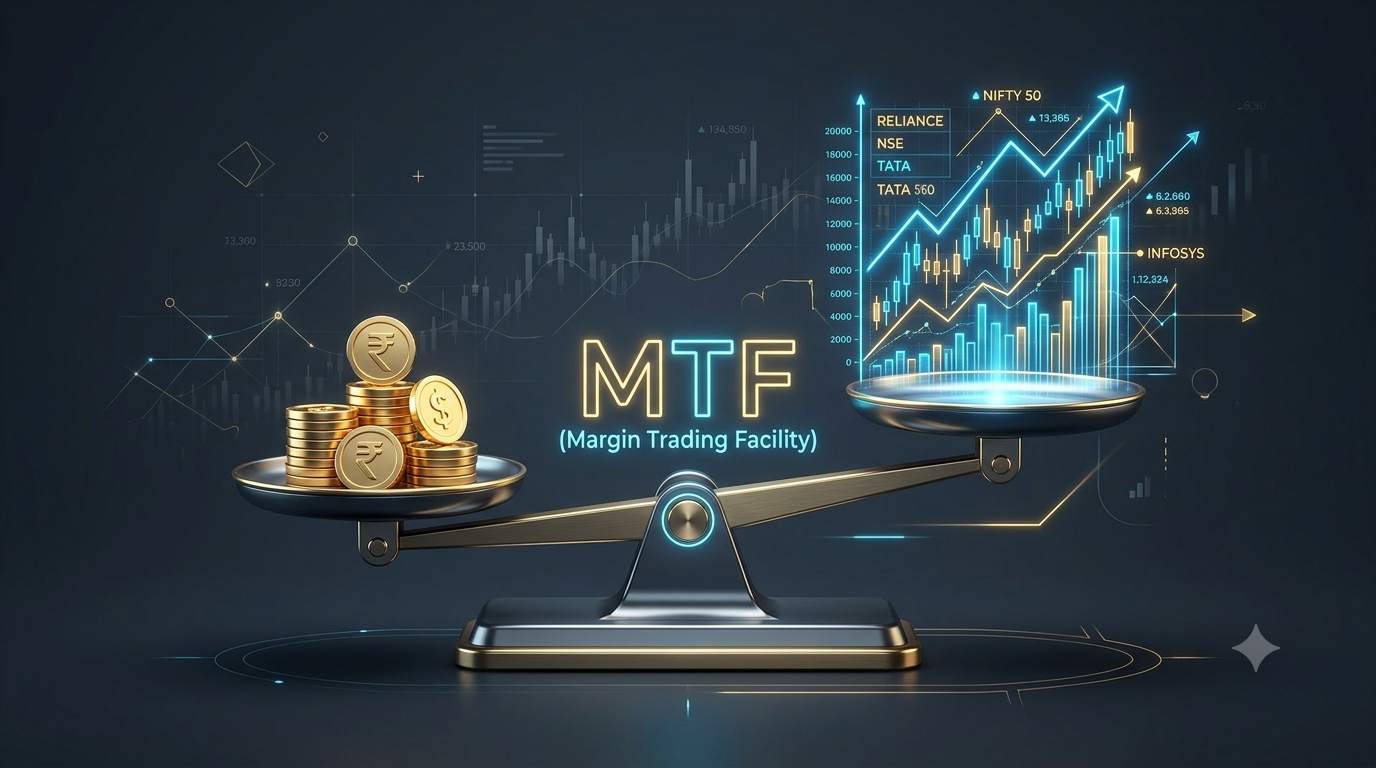
Sensex (30 major BSE-listed companies) and Nifty 50 (50 major NSE-listed companies) don’t represent the whole market — they’re samples, designed to give a quick read on overall direction. A stock can rise while the Nifty falls, and vice versa.
SEBI: The Referee
The Securities and Exchange Board of India exists to enforce fair play — insider trading rules, disclosure requirements, broker conduct — so the system stays trustworthy enough for ordinary people to actually use it.
Wait — Isn’t a Stock Exchange the Same Thing as the Stock Market?
Close, but not quite. The stock market is the broader concept: the entire system of buying, selling, pricing, and regulating shares. A stock exchange — like the NSE or BSE — is a specific, licensed institution where that trading actually gets executed. Every stock exchange is part of the stock market. The stock market itself isn’t a single building or platform you can point to.
Bull Markets, Bear Markets, and the Words You’ll Keep Hearing
A bull market describes a sustained period where prices are generally rising and confidence is high. A bear market is the opposite — a sustained decline, usually alongside pessimism about the economy. Neither lasts forever, and neither moves in a straight line; both are dotted with sharp moves in the “wrong” direction that don’t actually break the underlying trend. Knowing which one you’re in matters less for beginners than not overreacting to either.
Three Things People Get Wrong About the Stock Market
- “It’s basically gambling.” A casino has a built-in house edge against you by design. Owning a share of a profitable, growing business isn’t a coin flip — the odds genuinely shift with how the underlying company performs.
- “You need to be rich to start.” Fractional pricing on many stocks means you can start with whatever you can set aside, not a fixed entry fee.
- “It’s only for finance experts.” Understanding the mechanics — what you just read — covers most of what actually matters. The rest is patience, not a finance degree.
- “You have to time it perfectly.” Even professional fund managers rarely call market tops and bottoms consistently. How long you stay invested tends to matter more than how precisely you time any single entry or exit.
The stock market doesn’t reward people who understand it perfectly. It rewards people who understand it well enough to stay calm.
Once the mechanics click, the real work starts: opening an account and making your first move. Our beginner’s walkthrough covers exactly that, step by step, if you’re ready for it. If you’d rather build your understanding further first, our roundup of stock market learning platforms is a good next stop.
Frequently Asked Questions
What decides whether a stock’s price goes up or down?
The balance between buyers and sellers at any given moment, which is shaped by everything from company earnings and news to broader economic conditions and investor sentiment. No single factor controls it.
Is the stock market the same thing as trading?
Not exactly. The stock market is the system itself. Trading is what you do within it — the act of buying and selling. You can be an investor in the stock market without actively trading day to day.
Can the entire stock market lose all its value?
In practice, no — that would require every listed company to become worthless simultaneously. Individual stocks can go to zero; broad markets can fall sharply, but historically they’ve recovered over time as the underlying economy continues functioning.
Final Verdict:
The introduction of the Closing Auction Session (CAS) aligns Indian markets with global standards. While F&O traders get a bonus 10 minutes to trade, intraday cash traders must act faster before the 3:10 PM square-off alarms ring. Adjust your trading clocks accordingly!
Financial Disclaimer: The information provided in this article is for educational and informational purposes only and does not constitute financial advice. SME investments carry high structural and liquidity risks. Always consult with a SEBI-registered investment advisor before deploying capital into the markets.