

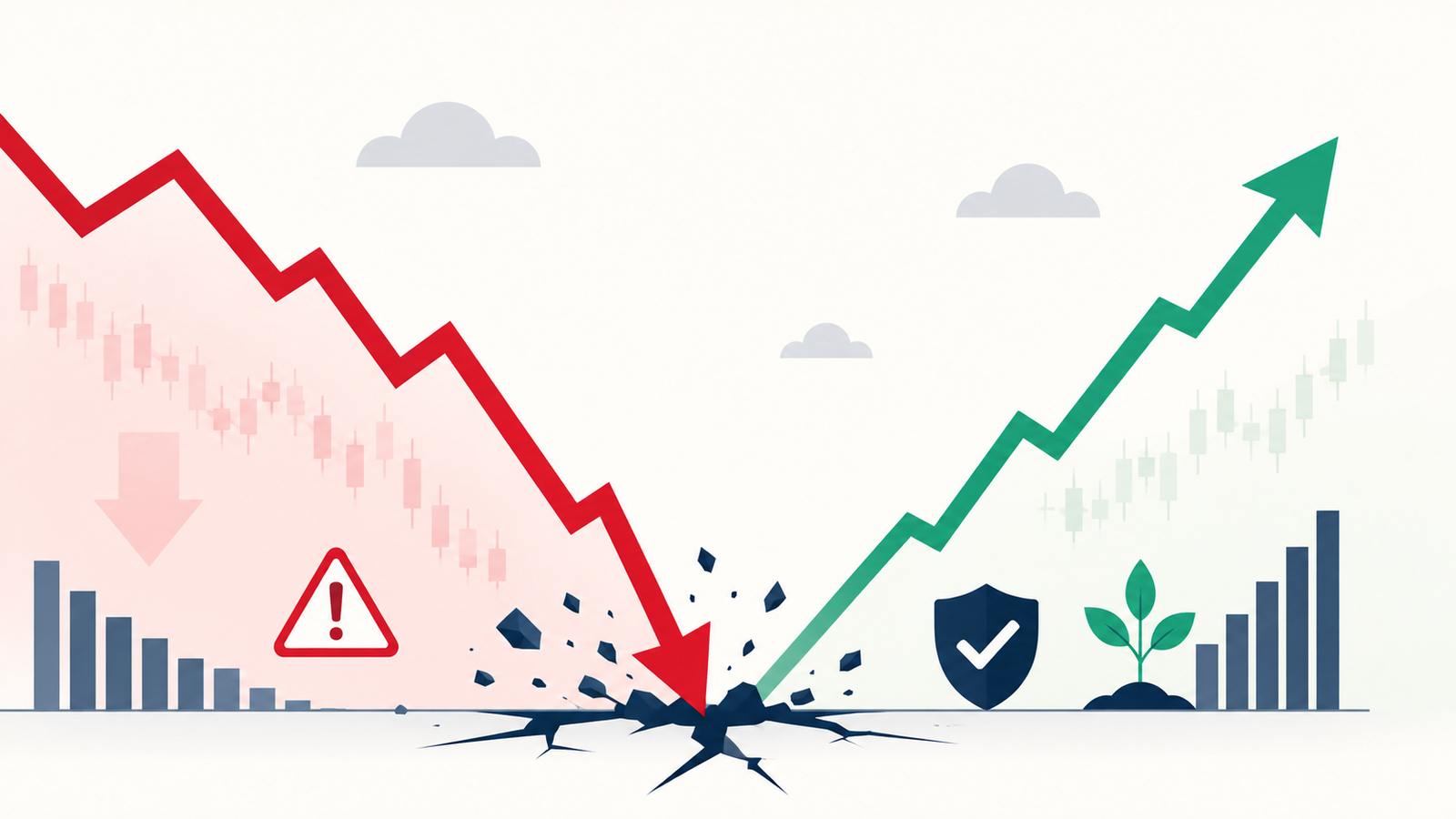
Every generation of Indian investors has a crash they remember by name — 1992, 2008, 2020 — and every one of those crashes felt, at the time, like it might be permanent. None of them were. Understanding what actually happens during a share market crash, and why they end, is more useful than trying to predict when the next one arrives.
What a Market Crash Actually Is
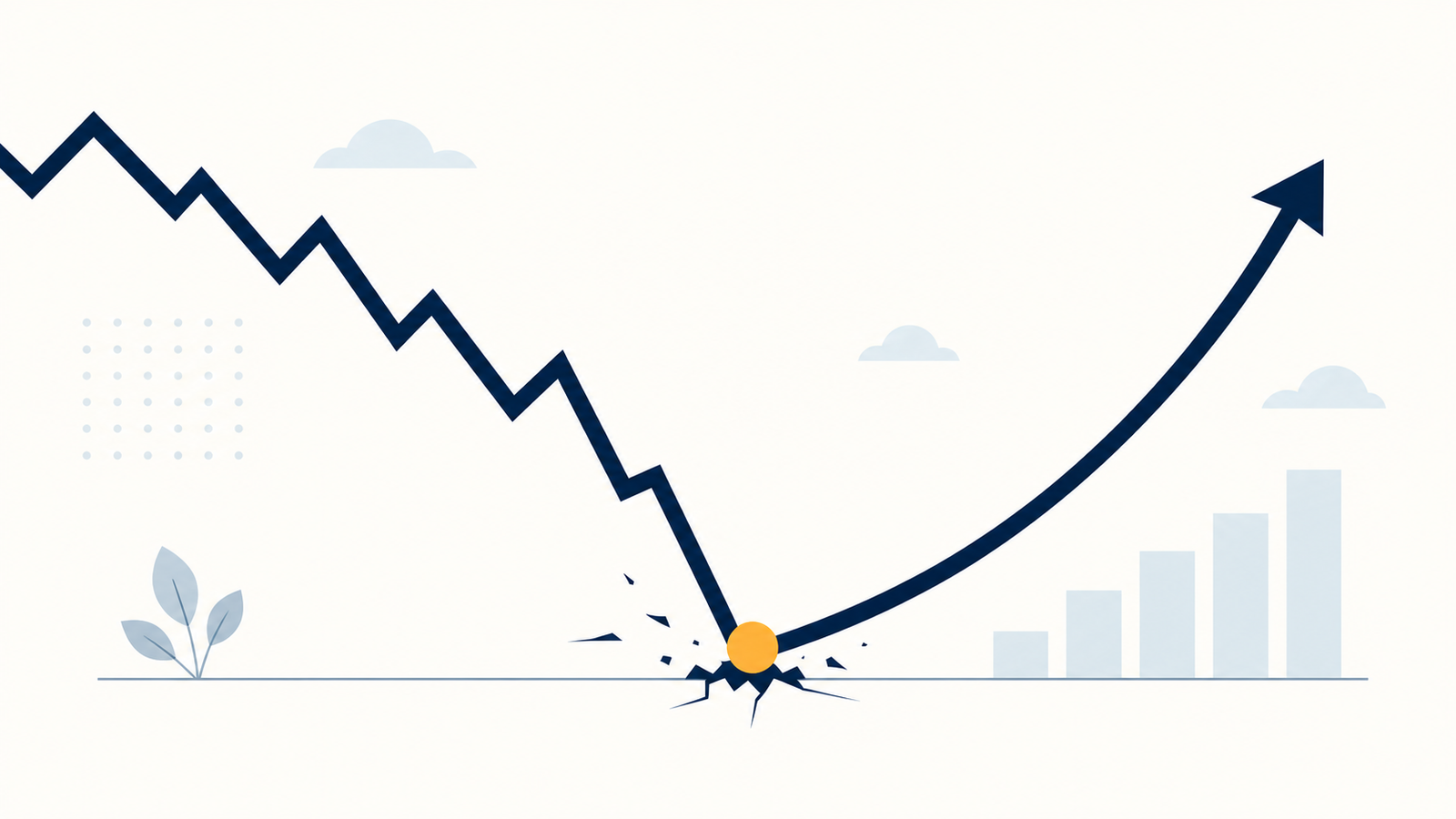
A crash is a sudden, sharp, widespread drop in stock prices, usually over days rather than weeks — distinct from a normal bad month, and distinct from a bear market, which is a slower, more prolonged decline. Crashes tend to involve panic selling: once prices start falling fast enough, some investors sell simply because others are selling, which pushes prices down further than the original problem alone would justify.
Crash, Correction, or Bear Market? The Words Aren’t Interchangeable
Financial media uses these terms loosely, but they describe different things. A correction is a decline of roughly 10% or more from a recent high — common, frequent, and often over within weeks. A crash is faster and sharper than a correction, often losing a similar or greater amount in a matter of days rather than weeks, usually tied to a specific triggering event or panic. A bear market is defined less by speed and more by duration — a sustained decline, typically 20% or more, that can drag on for months. A single crash can be the sharp opening chapter of a longer bear market, or it can recover quickly and never become one at all; the terms describe pattern and duration, not severity alone.
India’s Most-Referenced Crashes, and What Actually Caused Them
1992 — The Harshad Mehta Scam
A large-scale securities fraud exploiting gaps between the banking and stock settlement systems came to light, triggering a sharp market decline once the scale of the manipulation became public. It remains the reference point for how fraud, not just economic fundamentals, can trigger a crash.
2000 — The Dot-Com Collapse and Ketan Parekh
A global collapse in inflated technology-stock valuations coincided with another major Indian market manipulation case, compounding the damage. Both crashes shared a common thread with 1992: prices had drifted far from what the underlying businesses could actually justify.
2008 — The Global Financial Crisis
A crisis that began in the US mortgage and banking system spread globally, and Indian markets fell sharply alongside nearly every other major market worldwide. This one wasn’t about fraud or a single manipulated sector — it was a genuine global credit crisis that touched nearly every economy.
2020 — The COVID-19 Crash
Markets worldwide fell within days as lockdowns began and the economic impact of the pandemic became clear. It was also one of the fastest recoveries on record, with Indian markets regaining most of the lost ground within months rather than years — a reminder that crash speed and recovery speed aren’t always related.
What Crashes Actually Have in Common
- A trigger that was often visible in hindsight. Overvaluation, fraud, or a genuine economic shock — but rarely a complete surprise to everyone paying attention.
- Panic that outran the actual bad news. Prices typically fall further and faster than the underlying problem alone would justify, because fear compounds itself.
- A recovery that eventually happened. Every major crash on this list was followed, eventually, by markets not just recovering but reaching new highs.
The crash is the part everyone remembers. The recovery is the part that actually determined whether staying invested paid off.
What Actually Helps During a Crash — and What Doesn’t
Selling everything during a sharp decline locks in the loss permanently, converting a temporary drop into a permanent one — the single most common mistake investors make in the moment. What tends to help instead: knowing your own time horizon going in, so a short-term drop doesn’t force a decision you didn’t plan to make; holding a genuinely diversified portfolio rather than a concentrated bet, so no single crash-triggering event wipes out everything at once; and having cash set aside for near-term needs so you’re never forced to sell investments at the worst possible moment just to cover an expense.
None of this means crashes don’t hurt, or that timing genuinely doesn’t matter at all. It means the investors who came out fine after 1992, 2000, 2008, and 2020 were mostly the ones who didn’t sell everything in the middle of the panic — not the ones who correctly predicted the exact bottom.
If the mechanics of how a stock’s price actually gets pushed down that fast during a panic aren’t clear, our explainer on how the stock market works covers the buyer-seller matching process behind it. And if you’re building a strategy meant to survive events like these rather than just react to them, our guide to investment strategy covers the groundwork.
For a factual, dated record of past market volatility and regulatory responses to it, NSE’s own historical circulars and announcements are a more reliable source than most retrospective commentary.
Frequently Asked Questions
How long does it usually take markets to recover after a crash?
It varies enormously — the 2020 COVID crash recovered within months, while some historical crashes elsewhere have taken years. There’s no reliable fixed timeline, which is exactly why having cash for near-term needs matters more than guessing at a recovery date.
Can a stock market crash be predicted in advance?
Not reliably, and not with specific timing. Warning signs like extreme overvaluation are sometimes visible in hindsight, but predicting exactly when a crash starts has a poor track record even among professional forecasters.
Should I stop investing new money during a crash?
That depends entirely on individual circumstances, time horizon, and risk tolerance, so there’s no universal answer — but reflexively pulling out purely from fear, without a specific reason tied to your own plan, is the pattern that has historically hurt long-term investors the most, since it turns a temporary paper loss into a permanent, realized one.
Financial Disclaimer: The information provided in this article is for educational and informational purposes only and does not constitute financial advice. SME investments carry high structural and liquidity risks. Always consult with a SEBI-registered investment advisor before deploying capital into the markets.


