
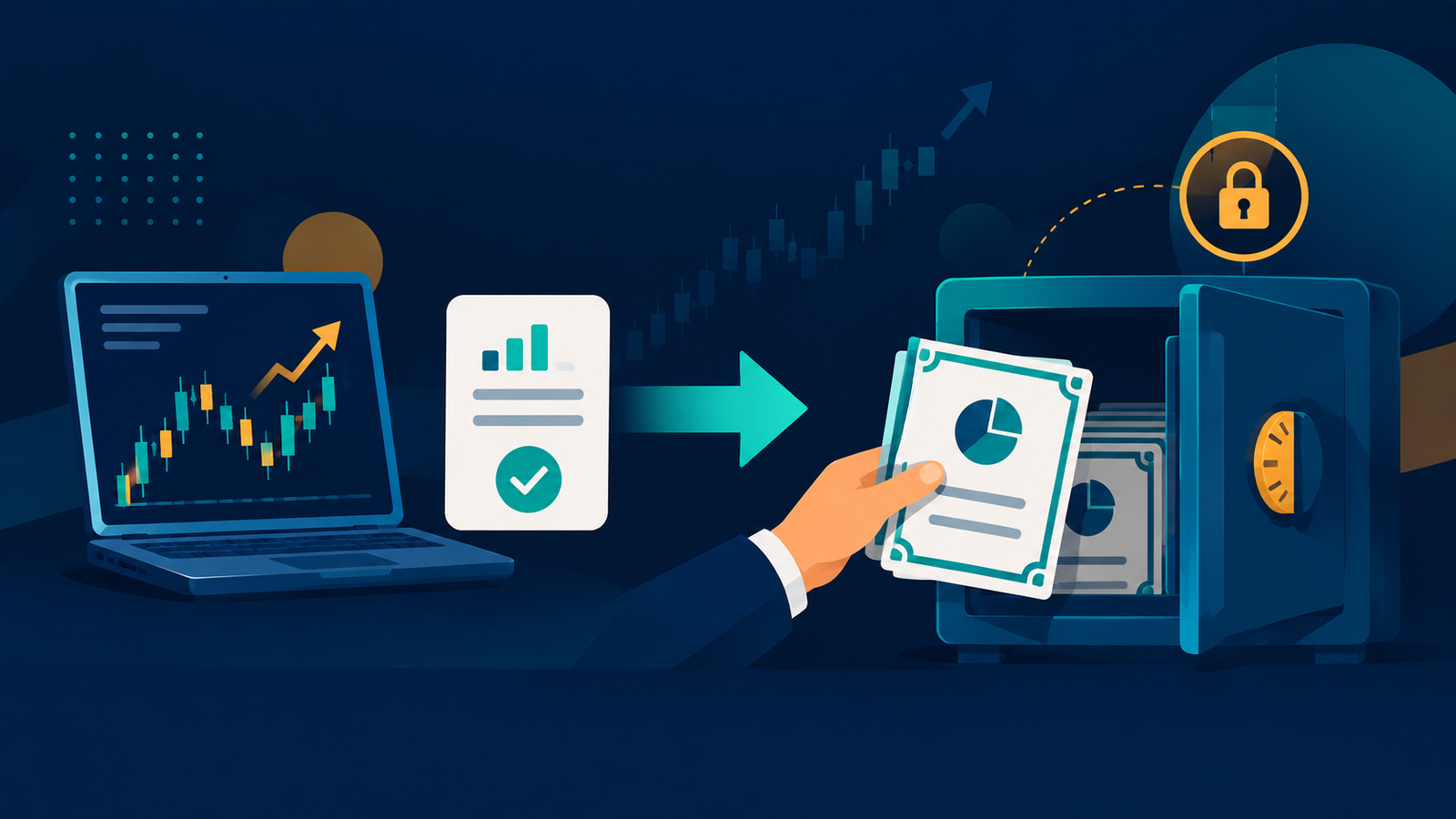
The word “delivery” makes it sound like something is being shipped to your door, which trips up more beginners than you’d expect. Nothing physical moves. What is Delivery in the stock market is really just an answer to one question: are you keeping these shares, or selling them before the day ends?
Delivery Trading vs. Intraday Trading — The Core Difference
Delivery trading means buying shares and actually taking ownership of them into your demat account, where they sit until you decide to sell — a day, a month, or a decade later. Intraday trading means buying and selling the same stock on the same day, closing the position before the market shuts, so the shares never actually settle into your demat account at all. Delivery is investing in the plain sense of the word. Intraday is a same-day bet on price movement.
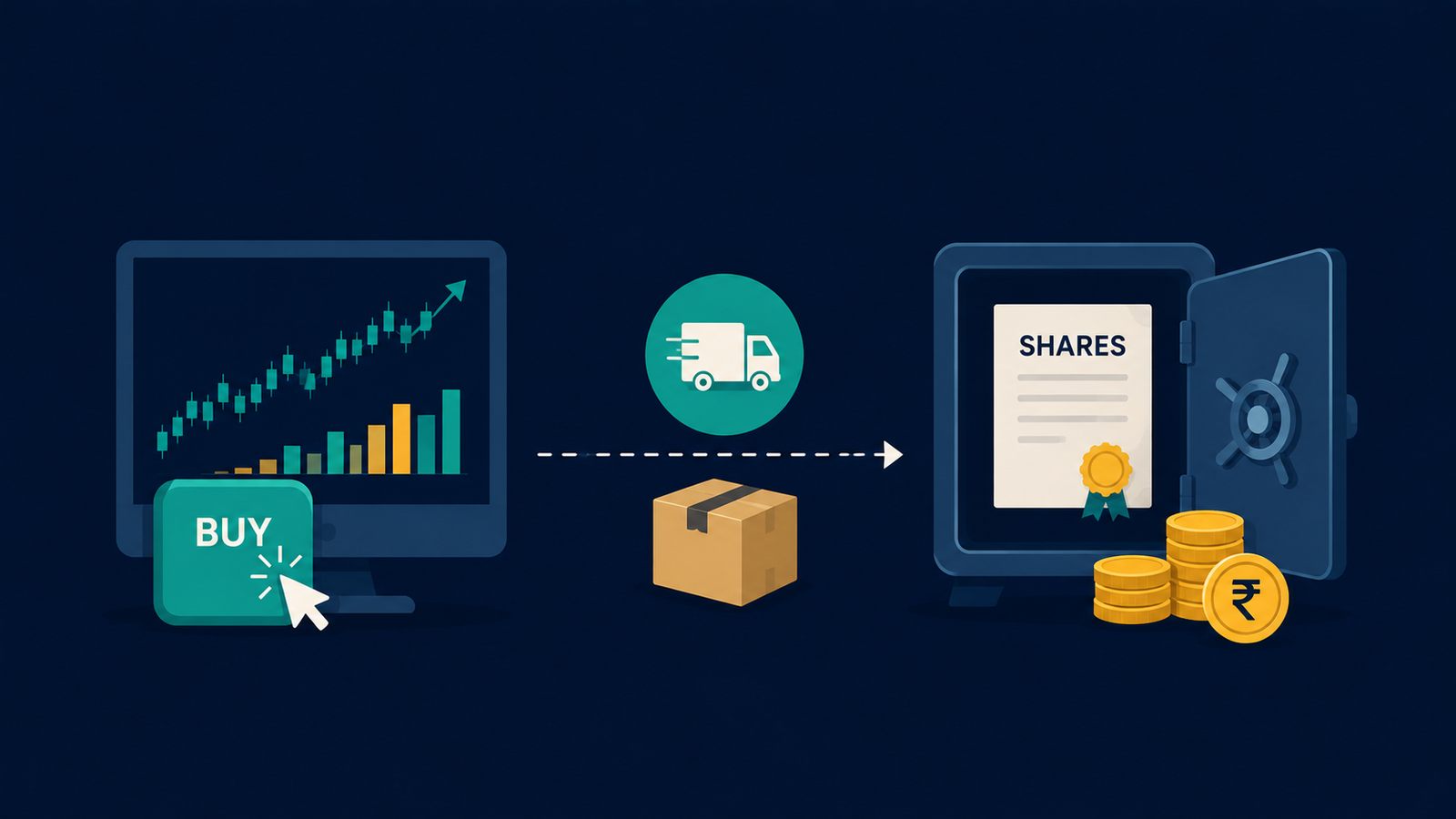
How You Actually Choose Delivery When Placing an Order
Every major broker’s order screen asks you to pick a product type before you can place a trade, and the option you want for delivery is almost universally labeled CNC — Cash and Carry. The intraday equivalent is usually labeled MIS — Margin Intraday Square-off. Pick CNC, and your broker assumes you’re paying the full amount and keeping the shares. Pick MIS by mistake on a stock you meant to hold, and your broker may automatically square off (sell) the position before market close whether you wanted that or not.
What Delivery Actually Costs You Differently
Two real cost differences separate delivery from intraday, and both show up on your contract note whether you notice them or not:
Securities Transaction Tax (STT): Delivery trades are taxed at 0.1% of the transaction value on both the buy and the sell side. Intraday trades are taxed at a lower 0.025%, and only on the sell side. Buy ₹1,00,000 worth of shares for delivery, and you’ll pay ₹100 in STT just on the purchase — an intraday trade of the same size wouldn’t be taxed at all going in.
Margin requirements: Delivery trades generally require you to pay the full transaction value upfront. Intraday trades typically let you put up a smaller fraction of the value as margin, since the position closes the same day — which is also exactly why intraday carries more risk per rupee actually deployed.
What Happens After You Buy
Once a delivery trade executes, it doesn’t finish instantly — settlement takes a trading day to complete under India’s current T+1 cycle, at which point the shares formally land in your demat account and the funds leave your linked bank account. Our full guide to market timings and settlement covers this cycle in more detail if you want the mechanics behind it.
Why the Tax Treatment Is Completely Different Too
This is the part most beginners never hear until it’s tax season and something doesn’t add up. Profit from delivery-based trades is taxed as capital gains — short-term if you held the shares under 12 months, long-term if you held longer, each with its own tax rate. Profit from intraday trading, by contrast, is treated by the Income Tax Department as speculative business income, not capital gains at all, and gets taxed at your regular income tax slab rate instead. It’s not just a different number — it’s an entirely different category of income, with different rules about what losses you can offset against what other income.
This is one more reason the delivery-versus-intraday decision isn’t just about strategy. It follows you all the way to your tax return.
When Delivery Makes More Sense Than Intraday
Delivery suits a straightforward test: are you buying because you believe in the business over months or years, or because you think the price will move in the next few hours? If it’s the former, delivery is the only sensible choice — intraday closes your position before any of that longer-term thesis has time to play out. Delivery also removes the pressure of watching a screen all day, since there’s no same-day deadline forcing a decision.
Intraday isn’t automatically the wrong choice, either — it exists for genuinely different goals, like profiting from a specific short-term price move without wanting overnight exposure to news or volatility. The mistake isn’t choosing intraday. It’s choosing it by accident, on a stock you actually meant to hold, because the wrong order type was selected out of habit.
Intraday asks you to be right about today. Delivery only asks you to be right eventually.
New shares bought for delivery land in the same account covered in our guide to opening a demat account, if you haven’t set one up yet or want a refresher on how the account itself works.
For the current official STT rates straight from the exchange rather than a secondhand summary, NSE’s own circulars are published directly on their site.
Frequently Asked Questions
Can I convert an intraday trade into a delivery trade after buying?
Some brokers allow this before the market closes on the same day, usually through a “convert position” option, but it isn’t universal across every broker and often needs to happen well before the closing bell. Relying on it as a backup plan is riskier than just selecting the right order type upfront, since a busy market day is exactly when you’re most likely to forget.
Do I need more money to buy shares for delivery than for intraday?
Generally yes — delivery typically requires the full transaction value upfront, while intraday often allows a smaller margin since the position closes the same day. This means delivery limits how many shares you can buy with a given amount of capital, compared to intraday.
Is delivery trading the same thing as investing?
In practical terms, yes — delivery is what most long-term investing actually looks like at the order-placement level. “Investing” describes the intent and time horizon; “delivery” is simply the mechanical order type that matches that intent, which is why the two words get used almost interchangeably in everyday conversation about the market.
Financial Disclaimer: The information provided in this article is for educational and informational purposes only and does not constitute financial advice. SME investments carry high structural and liquidity risks. Always consult with a SEBI-registered investment advisor before deploying capital into the markets.