Have you ever tried to buy a stock on your trading app, only to be greeted by a bright yellow warning banner stating: “This stock is under ASM Stage 1” or “100% margin required due to GSM framework”? What is ASM and GSM in Stock Market 2026? Lets Dive in about SEBI Rules
For many beginner investors, these acronyms trigger instant panic. You might wonder if the company is going bankrupt or if your funds are stuck forever. If you are searching for what is ASM and GSM in stock market 2026, take a deep breath. These are not penalties on the company, but rather protective shields deployed by the market regulator.
In this comprehensive guide, we will decode SEBI’s surveillance frameworks, explain the differences between ASM and GSM, and outline exactly how they impact your trading strategies.
1. What are SEBI Surveillance Measures?
The Securities and Exchange Board of India (SEBI) and major exchanges like the NSE and BSE constantly monitor the market for abnormal trading activities. Their primary goal is to protect retail investors from extreme volatility, price manipulation, and pump-and-dump schemes.
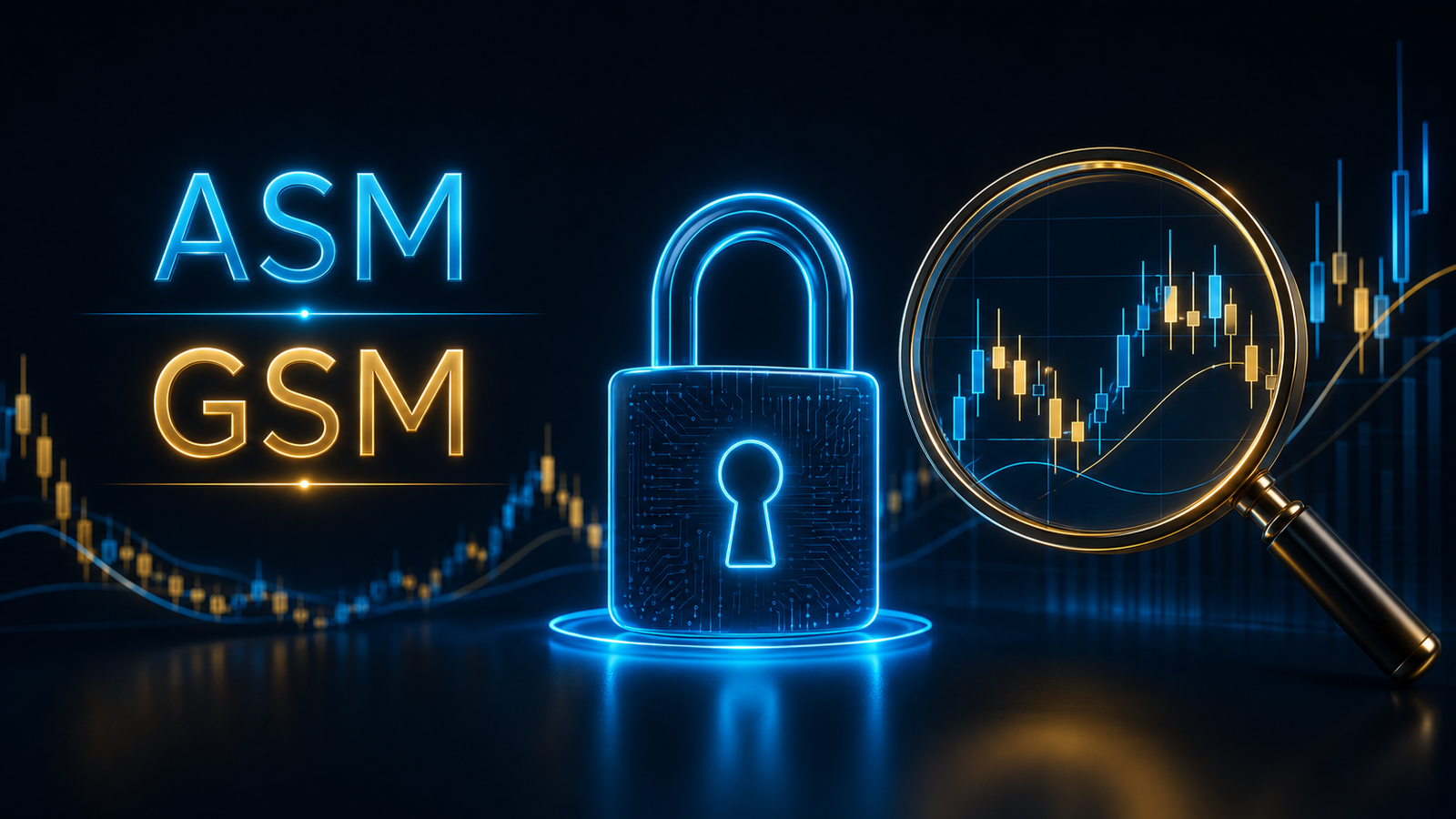
To control unnatural price movements, the exchanges place highly volatile or fundamentally weak stocks into specific surveillance categories: ASM (Additional Surveillance Measure) and GSM (Graded Surveillance Measure).
2. What is ASM in the Stock Market?
ASM (Additional Surveillance Measure) is applied to stocks that exhibit unusual price fluctuations, massive volume spikes, or high client concentration, regardless of the company’s financial health. Even fundamentally strong companies can temporarily end up on the ASM list if their stock price skyrockets or crashes too quickly.
ASM is divided into two categories: Short-Term ASM and Long-Term ASM. As a stock progresses through the stages, the trading restrictions become tighter.
- ASM Stage 1: The stock is placed under observation. The exchange mandates a higher upfront margin for trading (usually a minimum of 40% or 1.5 times the existing margin).
- ASM Stage 2 & Higher: The margin requirement is strictly increased to 100%. This means you cannot use leverage or facilities like the Margin Trading Facility (MTF) to buy these stocks. Additionally, the daily price bands (upper and lower circuits) are reduced, often to 5% or lower.
3. What is GSM in the Stock Market?
While ASM focuses primarily on price and volume volatility, GSM (Graded Surveillance Measure) is much stricter. GSM targets companies that exhibit abnormal price movements combined with poor financial health (e.g., negative earnings, very low net worth, or tiny market capitalization).
GSM acts as a major red flag for investors. The stages of GSM progressively choke the liquidity of the stock to kill speculative trading:
| GSM Stage | Trading Restrictions Applied |
|---|---|
| Stage 1 | 100% upfront margin required. Price band reduced to 5% or lower. |
| Stage 2 | Stock is moved to the Trade-to-Trade (T2T) segment. An Additional Surveillance Deposit (ASD) of 50% is required from the buyer. |
| Stage 3 | Trading is only permitted once a week (usually Monday). ASD requirement jumps to 100%. |
| Stage 4 | Trading is allowed once a week with 100% ASD, and the price is strictly restricted from moving upward (it can only remain flat or go down). |
4. How ASM and GSM Impact Your Trades in 2026
If you hold or wish to trade a stock that enters these lists, you will face several immediate roadblocks:
- No Intraday Trading: Because of the 100% margin requirements and T2T settlement rules, intraday trading (MIS) is completely blocked for stocks in advanced ASM/GSM stages.
- No BTST (Buy Today, Sell Tomorrow): If a stock is in the Trade-to-Trade (T2T) segment (like GSM Stage 2), you must wait for the shares to be physically credited to your Demat account before you can sell them. Doing BTST here will result in immediate short delivery penalties. (Learn more about BTST Trading Rules and Risks).
- Pledging Restrictions: Brokers generally do not accept ASM/GSM stocks as collateral. If you have pledged these shares for F&O margin, your broker will likely unpledge them and issue a margin call.
5. Should You Panic if Your Stock is in ASM?
Not necessarily. Being on the ASM list does not mean the company is fraudulent. Many reputable mid-cap and small-cap stocks enter the Short-Term ASM list during broad market bull runs simply because their trading volume spiked rapidly. Once the volatility settles, the exchange reviews the list quarterly (or bi-weekly for short-term ASM) and removes stable stocks.
However, if your stock is repeatedly moving up the GSM stages, you should be extremely cautious and re-evaluate the fundamental strength of the company.
Frequently Asked Questions (FAQs)
Can I sell my shares if the stock is moved to ASM Stage 4?
Yes, you can always sell your existing delivery holdings. The surveillance measures restrict leverage and enforce strict margins for buying, but they do not stop you from exiting a position you already hold in your Demat account.
How long does a stock stay in the ASM or GSM list?
There is no fixed duration. The exchanges conduct periodic reviews. If the stock’s volatility and trading patterns normalize and fall below the surveillance threshold criteria, it is downgraded to a lower stage or removed entirely.
Where can I check the current ASM/GSM list for 2026?
You can download the live, updated list of ASM and GSM stocks directly from the official NSE (National Stock Exchange) and BSE websites under their “Market Surveillance” sections.
The Bottom Line:
ASM and GSM are the stock market’s speed breakers. While ASM simply asks you to slow down and use your own cash (100% margin) instead of borrowed funds, GSM is a strict warning sign regarding the company’s financial health. Always check a stock’s surveillance status before heavily committing your capital.
Financial Disclaimer: The information provided in this article is for educational and informational purposes only and does not constitute financial advice. SME investments carry high structural and liquidity risks. Always consult with a SEBI-registered investment advisor before deploying capital into the markets.